
- There’s a worrying hole in China’s tax system
- What’s the deal with ‘limited-term’ property ownership?
- Practical solutions to solve asset transfer problems
A debate has sprung up concerning assets owned by individuals in China. In this essay, Richard Cullen guides us through the issues and looks at intriguing solutions that could move the country forwards
CHINA’S MASSIVE LEVEL of accumulated wealth is a primary reason why the country’s lack of an inheritance tax in China is back in the news. The Economist recently investigated this prominent flaw in China’s tax regime in an article entitled: “China is wrestling with a novel phenomenon: inherited wealth.” Draft regimes were proposed several times in the past but never applied – see this link.
China’s Real Estate Wealth
The nominal GDP of the People’s Republic of China was approximately US$216 billion in 1978.
By 2025 was it around US $18.7 trillion. These figures indicate a raw, 86-fold expansion of China’s economy over this period.
According to CSIS, a leading US think tank, China has become the world’s largest economy measured by Purchasing Power Parity, or PPP (link).

INDIVIDUALLY-HELD ASSETS
One remarkable consequence is the prodigious growth in individually-held assets in China over the last several decades. A great deal of this privately held wealth comprises urban and regional real estate, where residential premises dominate.
According to the 2026 world population review, there are over 520 million households in China accommodating 1.4 billion people (see: https://worldpopulationreview.com/country-rankings/number-of-households-by-country).
CNN recently confirmed that around 90% of these households are privately owned (see: https://edition.cnn.com/2026/05/17/china/china-homeownership-rate-tested-intl-hnk).
By 2016, Savills said the Chinese real estate market, valued at US$42.7 trillion, was the largest globally, ahead of the US (link). This figure has since increased (link).
Real Estate Ownership
A widely established, basic ownership distinction is drawn between freehold title and leasehold title to land. Briefly, freehold title grants a right of complete, indefinite ownership of land and any building thereon, while leasehold title is time limited, for example to 50, 90 or even 999 years (see: https://www.moneyhelper.org.uk/en/homes/buying-a-home/leasehold-vs-freehold-whats-the-difference). (Short term accommodation rentals are also often termed leasehold).
Behind each leasehold title sits an ultimate landlord, either a private owner or a public entity.
This formulation (under various names) is typically found in Common Law jurisdictions, across Western Europe and well beyond (see: https://www.dlapiperrealworld.com/law/index.html?t=sale-and-purchase).
Primary, limited-term (leasehold) real estate ownership systems are more prevalent than most people realize.
It is common to list Vietnam, North Korea and Cuba, for example, as jurisdictions where the freehold ownership of land is prohibited.
But two of the most active real estate markets in Asia, Singapore and Hong Kong, rely on essentially similar systems, as does Australia’s capital city, Canberra.
And most flats or apartments in England and Wales are still owned under a leasehold system (https://commonslibrary.parliament.uk/research-briefings/cbp-10309/).
Real Estate Ownership in China
China, by dint of its scale, is by far the most significant jurisdiction where term-limited ownership of land applies.
The state is the ultimate owner of all urban land, while collective – not individual – ownership systems regimes apply across rural areas in China.
The term leasehold ownership is not used. Urban home owners (and commercial property owners) enjoy ownership of the relevant buildings and they secure land-use rights for a fixed period – normally 70 years for residential accommodation and 40 years for commercial premises (see: https://www.fig.net/resources/proceedings/2005/bangkok_2005_comm7/papers/9_1_guo.pdf).
The development of this distinctive Chinese ownership model has been shaped by referencing the strikingly similar systems which apply in Hong Kong and Singapore (see: https://lkyspp.nus.edu.sg/gia/article/winners-and-losers-in-china-s-urban-transformation-land-use-reforms-and-their-implications-for-other-developing-countries).
In Hong Kong (above), the government retains an ultimate proprietary interest in virtually all land. It collects modest, annual rent from millions of leaseholders and it imposes sometimes massive lease variation premiums on anyone redeveloping a particular site. Expiring leases are typically renewed without any significant costs being applied (where the usage remains unchanged).
In Singapore (below), the 99-year leases granted to the clear majority of home owners are expressly non-renewable, giving rise to increasing owner concerns as time passes (see: https://johnmenadue.com/post/2021/04/hong-kongs-housing-crisis-an-underlying-factor-in-the-2019-riots/).
Putting aside some piecemeal experimentation, the related questions of when and for how long land-use rights may be renewed, and what renewal fees may be payable, remain conspicuously unresolved in China (see: https://scholarship.law.vanderbilt.edu/vjtl/vol50/iss3/3/).
How Does China Tax Substantial Wealth Transfers
Certain substantial gifts and the later sale of inherited assets might (subject to intra-family and other exemptions) trigger income tax, capital gains tax, stamp duty or deed tax impositions. These duties, if applied, are (compared to most Western jurisdictions) rarely onerous (link).
Meanwhile, China still does not have a regime for imposing inheritance taxation or gift duties despite significant policy discussions related to this topic dating back over three decades (link).
Bearing in mind the extraordinary, rapid accumulation of widely held private wealth detailed above, this tax policy omission is striking and concerning.
Beijing’s multi-decade hesitancy with respect to specific inheritance taxation relates to significant concerns about social stability, anxiety about creating a centralized asset registration system and, in particular, the risk of triggering capital flight (link).
The arguments in favour of developing a dedicated mechanism for taxing tax substantial wealth transfers in China in a fair and effective way at the time death – and by way of gifts – are becoming increasingly cogent, however. Equitable contributions from all in China are needed to advance the long-term implementation of the important common prosperity doctrine.
According to Liu Zuo, deputy director of a State Administration of Taxation (SAT) research unit, an inheritance tax is badly needed “to maintain social stability and stimulate consumption” adding – after noting how very wealthy the most wealthy in China are -that, ultimately, “only the richest one to three percent of the population would be subject to the tax” (link).
In fact, the review above makes clear that there is a fresh way to expediate widespread acceptance of a new regime to tax substantial inter-generational wealth transfers and break the policy logjam.
A right to a minimal cost renewal of present residential land-use-rights for a further 70 years (a further 40 years for commercial rights) could and should be stipulated within a broad reform package introducing China’s first modern inheritance and gift tax system.
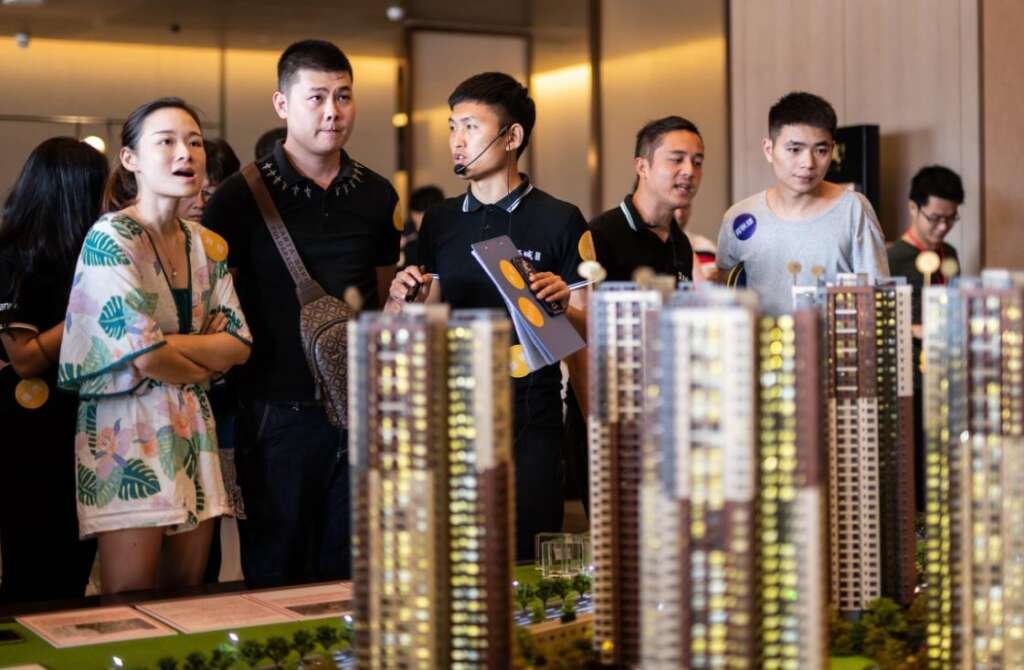
This would deliver significantly enhanced security of tenure for several hundred million property owners. And the direct cost to the government, at the time of implementation would be virtually zero. Moreover, there is little risk of any long-term cost as there is a clear likelihood the government would eventually find itself obliged to make a similar low-cost renewal decision in the future.
China does need a modern inheritance tax system and its huge land-use-rights regime is plainly in need of pivotal clarification. The introduction of a new comprehensive, equitable inheritance tax regime could be linked, very effectively, to substantial positive reform of China’s current system for granting land-use-rights.
Richard Cullen is an adjunct law professor at the University of Hong Kong and a popular writer on current affairs.
To see a list of articles he has written for this outlet, click this phrase.
To read his substack (highly recommended) click this LINK.
Picture at the top shows a family car by NIO, a top Chinese EV maker.