
The people of Xinjiang are growing in number, and in health and wealth: the opposite of a genocide. Hong Kong’s Herman Hu visited recently – one of 300 million people who visited the region in the past year.
FOREIGN MEDIA OUTLETS have recently once again repeated false allegations of so-called “genocide” in Xinjiang. There is no doubt that they want to undermine China’s development and disrupt social peace. Such actions deserve the strongest condemnation.
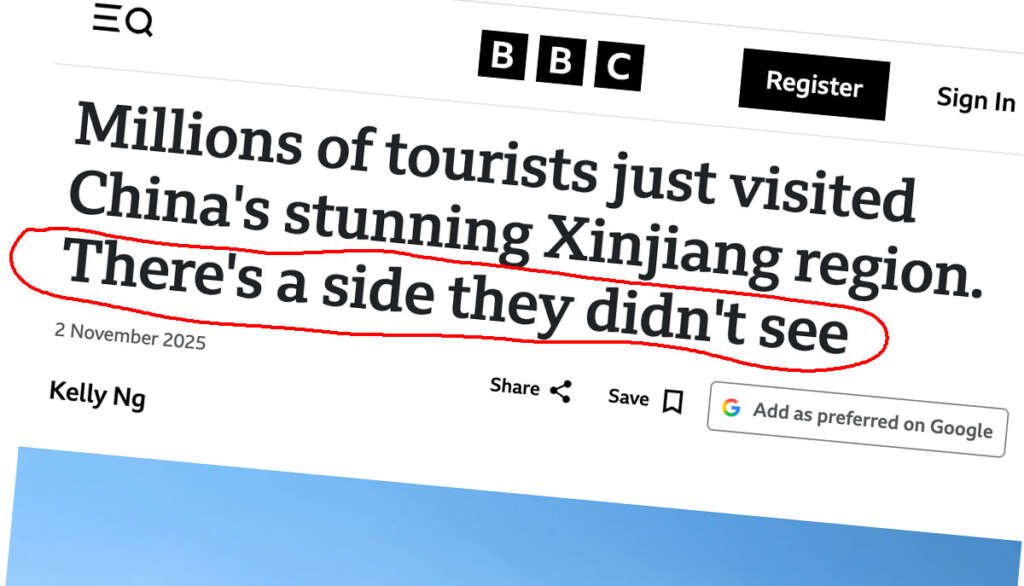
Under the Convention on the Prevention and Punishment of the Crime of Genocide, “genocide” is strictly defined as acts committed with the specific intent to destroy, in whole or in part, a national, ethnic, racial, or religious group.

Given the extreme gravity of this crime, international law dictates rigorous standards and legal procedures for its determination. As a permanent member of the United Nations Security Council, China remains fully committed to fulfilling its international obligations to prevent and punish genocide.
THE CRIME OF CRIMES
Historically, regions recognized by the international community as having suffered actual genocides experienced widespread atrocities, immense human loss, catastrophic socio-economic destruction, and sharp declines in their working-age populations.
The accusation of “genocide” is a groundless slander against China’s achievements in governing Xinjiang. As a unified nation of 56 ethnic groups, China implements a robust system of regional ethnic autonomy. Its comprehensive ethnic policies are anchored in the principles of equality, unity, mutual assistance, harmony, and shared prosperity. These policies are designed to safeguard social stability and long-term peace, fostering deep integration among all ethnic groups while forging a strong sense of community for the Chinese nation.
INTERNATIONAL TRADING AREAS
To elevate living standards, China has consistently supported Xinjiang’s opening-up to the global market, establishing three golden areas for westward trade: the Urumqi International Land Port Area, the China-Kazakhstan Horgos International Border Cooperation Center, and the Kashgar Area of the Xinjiang Pilot Free Trade Zone.
Capitalizing on the China-Europe Railway Express as a vital gateway to Eurasian markets, Xinjiang has transformed into a central hub connecting the Chinese mainland with Central Asia, West Asia, and South Asia, as well as Europe.
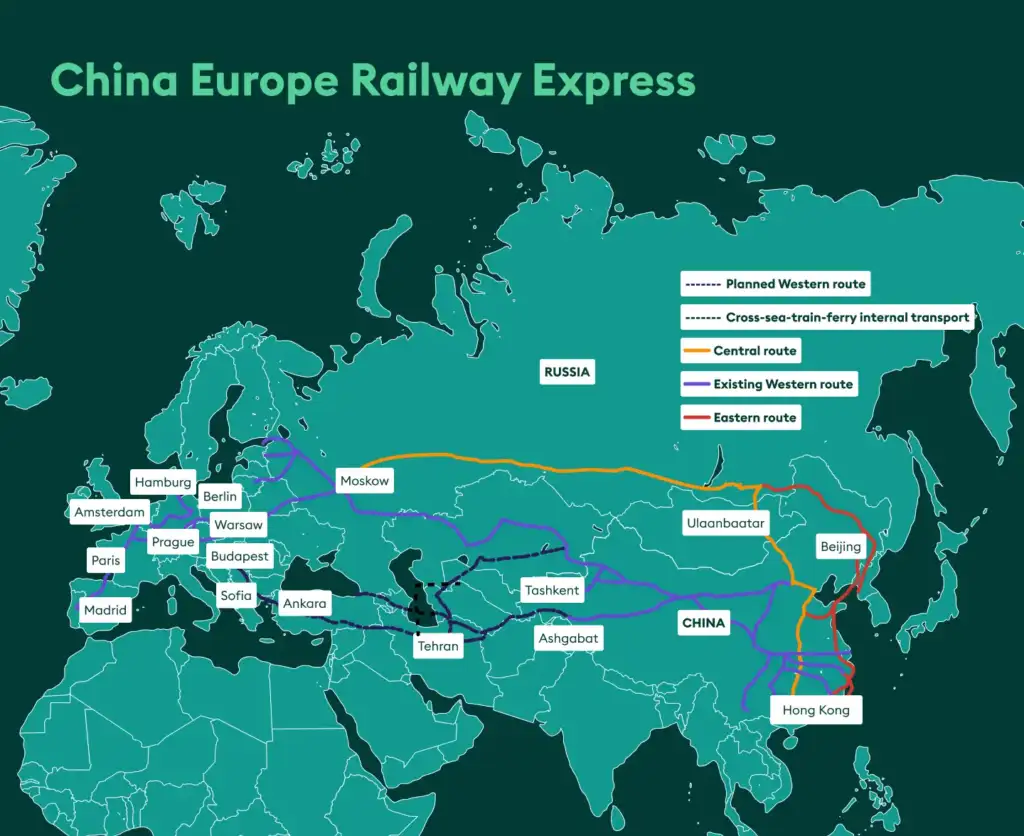
This strategic position, combined with targeted “pairing assistance” programs from various mainland provinces and cities, has revitalized Xinjiang’s economy. Xinjiang’s cross-border trade volume has now surpassed 400 billion RMB, driven by a robust mid-to-high GDP growth rate of 6.9%—a clear indicator of the region’s immense potential for international trade.
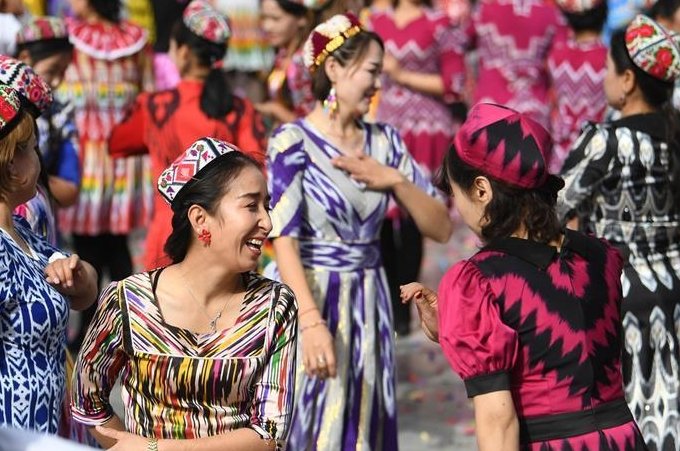
The Xinjiang Uyghur Autonomous Region is a diverse, multi-ethnic area where Uyghurs and Huis comprise the largest ethnic minority populations. To support families, China provides targeted childbirth incentives in border and minority regions, including enhanced childcare subsidies for second and third children alongside extended maternity leave.
Between 2010 and 2020, Xinjiang’s ethnic minority population grew by 10.26%, a rate more than double that of the Han population and well above the national average.
Over the past four decades, the Uyghur population in Xinjiang has nearly doubled, surging from 5.96 million to 11.62 million—a 95% increase. Concurrently, life expectancy has climbed from 60 years in the 1980s to 77 years today, reflecting continuous advancements in local healthcare and quality of life. Nationwide, the Uyghur (11.78 million) and Hui (11.38 million) populations rank as the third and fourth largest ethnic minorities in China, respectively.
Lies inevitably dissolve in the face of truth. In recent years, Xinjiang has generated record-breaking tourist arrivals and tourism revenue. In 2025, the region welcomed over 323 million tourists—doubling its 2018 figures and approaching the total population of the United States. Local tourism revenue reached 370 billion RMB, comparable to the annual tourism earnings of nations like Italy and Turkey.
Xinjiang is not only a premier domestic travel destination but also a rising star among international tourists. Iconic attractions like the Kashgar Old City and the Urumqi International Grand Bazaar possess revenue-generating power that rivals major international tourism hubs. Under such intense public scrutiny and amid a constant influx of global travelers, the notion of a so-called “genocide” is entirely untenable.

Seeing is believing. Last August, a Hong Kong delegation to the National People’s Congress of which I am a member, visited Xinjiang, touring Urumqi, Kashgar, and Ili.
During their review of local economic growth, rural revitalization, social welfare, ecological conservation, and the rule of law, they noted that local agriculture has achieved 100% smart, mechanized farming, sowing, and management.
The region is also actively upgrading its agricultural processing sector, unlocking even greater economic opportunities. We personally witnessed the genuine smiles and confidence of the local people, reflecting a tangible sense of happiness, fulfillment, and security as they enjoy the fruits of Xinjiang’s progress. Xinjiang is one of the most beautiful places in China and the Uyghur culture is uniquely fascinating. Xinjiang welcomes everyone!
Professor Herman Hu is Hong Kong Deputy to the National People’s Congress, and Past President of the Hong Kong Professional and Senior Executives Association.
He is also a key figure in the “Friday” news project from Friday Culture Ltd. Click here to read more of his articles.
Click here to read about one of his special interests: the growth of Hong Kong tennis.
Image at the top from the State Council Information Office.