
There have been hundreds of reports about China’s breakthroughs, including EV battery technology and chip-makers such as Changxin Memory Technologies, but few mention that they come from a landlocked province once famed for farming.
The agricultural province of Anhui took a dramatically different turn after an entire university was transported 1,000 miles. Herman Hu Shao-ming has the details.
INCREDIBLE JOURNEY
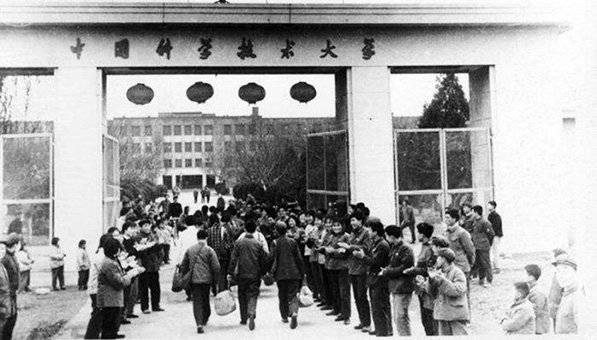
IN DECEMBER OF 1969, a large group of scientists began an incredible journey.
More than 470 households, along with 35,000 crates of scientific instruments, laboratory equipment, and books, had to be moved. Using steam locomotives and early diesel trains, they travelled 1,000 kilometers.
Why the move? There was civil unrest in Beijing at the time, so the government decided to move the entire University of Science and Technology of China to a new location.
But where should they go? People in Anhui Province, a landlocked province to the west of Shanghai, spared no effort in extending a warm welcome.
Even though it was an agricultural region, with no reputation for science, the invitation was persuasive, and the decision-makers chose Anhui’s capital city, Hefei, as the new home for China’s top scientists. The move took ten months.
.
A TRANSFORMATIONAL MOVE
It turned out to be a wise choice. With the scientists’ specialized knowledge, and the people of Anhui’s ambition and work ethic, the province has become a technological marvel—and a world class one, as statistics confirm.

The world’s top academic science journal, Nature, recently highlighted Anhui’s capital, Hefei, as a major global science hub, noting that it scores higher for natural sciences output than prominent Western cities like London, Los Angeles, or Chicago (above).
It is a remarkable achievement for a place that used to be known for its farming.
.
VISITORS FROM HONG KONG
The present writer visited Anhui recently, along with other Hong Kong deputies to the National People’s Congress. We spent seven days on a study tour. We were amazed by what we saw.
We visited Hefei, Xuancheng, and Wuhu. As well as touring numerous leading technology institutions, we saw revolutionary history education bases, and sites at which China’s intangible cultural heritage was preserved.
We gained a deep understanding of Anhui’s resilience and strength in cultivating “new-generation productivity” and personally experienced its determination to drive Chinese civilization and culture.
I believe Anhui’s technological innovation miracle is highly valuable for reference. We can learn from it.
.
ARTIFICIAL SUN
There are many examples of innovation in Anhui, but a notable example is China’s “Artificial Sun”, which is in Hefei. This is an experimental nuclear reactor that uses fusion, rather than fission, to generate power. It replicates the physical process found in the sun, which is why it is seen as a “star” on the ground.
The building-sized device, known to scientists as the Experimental Advanced Superconducting Tokamak, reaches temperatures higher than 100 million degrees Celsius, so can only be run for a few minutes at a time.
But as the technology develops, it has the potential to general clean, near-limitless energy for the world – a transformative technology for the whole planet.
.
INNOVATION MUSEUM
Anhui, fortunately, has preserved details of its remarkable historical journey. We visited the Anhui Innovation Museum in Hefei to gain a deeper understanding of how it transformed into a globally significant “city of innovation.”
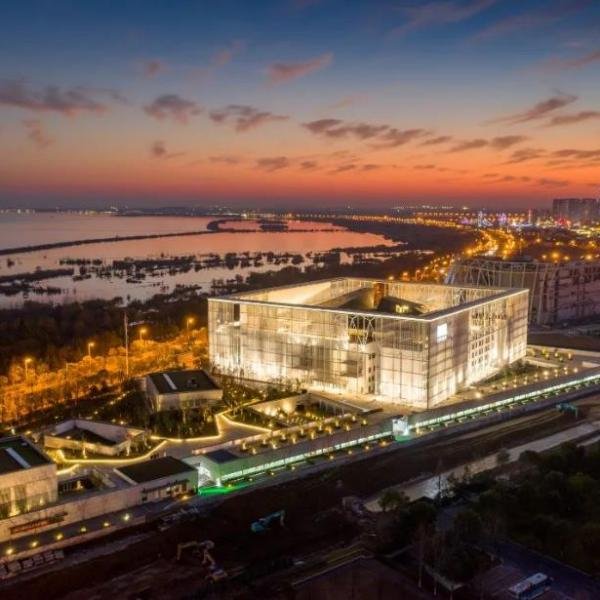
Subsequently, more world-class large-scale scientific facilities were established there. Currently, Hefei has 13 large-scale scientific facilities, becoming a base for an internationally influential “cluster of large-scale scientific facilities”.
Large-scale scientific facilities are considered “major scientific instruments,” large in scale and technologically complex, requiring national funding for construction and maintenance to solve cutting-edge fundamental scientific problems.
Therefore, they are highly sought after by scientists. Hong Kong does not have any large-scale scientific facilities, so Hong Kong researchers and scholars frequently visit Hefei to engage in in-depth cooperation with local researchers.
.
SCIENCE MAGNET
Success breeds success. The place has become a science magnet. Anhui has gathered more than 40 national-level laboratories and over 50 new research institutions, and has fostered more than 20,000 national high-tech enterprises and technology-based SMEs—areas where Hong Kong still needs to strive.
Anhui has nurtured industry leaders such as Changxin Memory Technologies, Chery Automobile, iFlytek, Sungrow Power, and NIO, generating substantial returns for long-term investments.
Anhui’s top-tier innovation environment has even attracted foreign investment; Volkswagen of Germany has established its largest new energy vehicle R&D center and supply chain base outside of Germany in Hefei, creating economic value and employment opportunities for the local area.
.
RIPE FOR COLLABORATION
Hong Kong, home to five of the world’s top 100 universities, possesses leading basic research capabilities. It should learn from Anhui’s successful industrialization experience and further deepen its collaborative cooperation with Anhui in scientific research and industrial transformation.
The governments of Hong Kong and Anhui should also take the lead in establishing a regular cooperation mechanism, fully opening up Hefei’s large-scale scientific facilities cluster, supporting Hong Kong scientific teams in applying for and using relevant cutting-edge facilities, and jointly contributing to the nation’s high-level scientific and technological self-reliance.
Furthermore, Hong Kong can fully leverage the unique advantages of “One Country, Two Systems,” its status as an international financial center, and its international standards in professional services such as law, accounting, and finance to collaborate with Anhui’s innovation and technology forces.
In 1969, it took ten months to move an entire university from Beijing to Hefei. Today, you can fly from Hong Kong to Hefei in just 2hrs 20mns. It’s well worth the journey.
Professor Herman Hu is Hong Kong Deputy to the National People’s Congress, and Past President of the Hong Kong Professional and Senior Executives Association.
He is also a key figure in the “Friday” news project from Friday Culture Ltd. Click here to read more of his articles.