
HONG KONG’S HOUSING has been in crisis for well over two decades, and so it remains today. There are people living in cubicles, bedspace apartments and cages, sharing toilet and washing facilities with dozens of other people. This is an outrage and an affront to society as a whole. It should not be tolerated in what is one of the leading financial centers of the world.
One of the main problems confronting the government is the lack of land suitable for housing development.
Way back in 2017, the government set up a Task Force on land supply. This reported a year later and recommended that 32 hectares (32 ha) of land occupied by the Fan Ling Golf Club be taken over for a massive public housing development, with associated civic and commercial spaces, and a transport hub. This report was accepted by government.
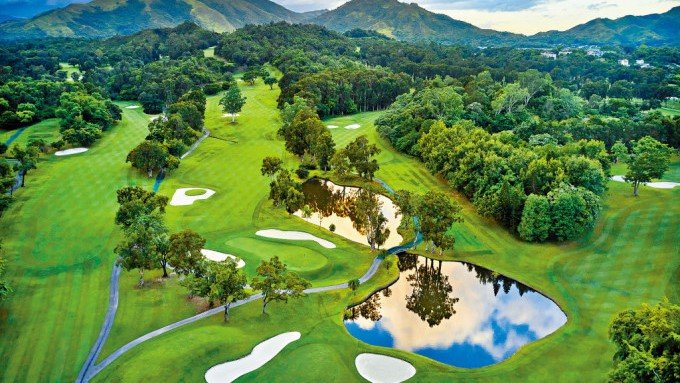
The Club had at that time a recreational lease on a total of 172 ha and ran three 18-hole golf courses, with accompanying facilities such as a clubhouse, swimming pool and tennis courts. The lease was due to expire in September 2023.
The 32 ha lie to the east of a small road called the Fan Kam Road and was first developed as a golf course (“the Old Course”) back in 1911.
The proponent of the scheme, the Civil Engineering and Development Department, began planning in February 2019: anticipating, presumably, to move in and begin the site-formation works the moment the lease on the 32 ha expired in September 2023. Had this happened, the scheme would probably have been completed by now.
THE DELAY
As of today, nothing has happened on the ground. This delay – inexcusable in the public interest – is caused solely by the judicial review application brought by the Golf Club in 2019 and the way the courts dealt with those proceedings: proceedings which culminated in a massive judgment seven years later by the Court of Appeal (303 paragraphs) – Hong Kong Golf Club v Director of Environmental Protection: CACV 573/2024.The judgment was handed down on 31/8/2026.
The result is even further delay. This is nothing short of scandalous.
Judicial review is a process brought in the name of good governance. Public interest is paramount. That is the ultimate aim of that jurisdiction. It is to promote proper administration and stop abuse of power by people in authority, and wrongs of that kind. Far less is that jurisdiction to be used as a formula for delay and obfuscation to hamper progress in a housing development. The Court of Appeal totally lost sight of those fundamental principles in that case.
THE ISSUE
Because of the size of the Fan Ling housing project, it comes under the regime laid down in the Environmental Impact Assessment Ordinance Cap. 499. This deals with assessing the impact on the environment likely to be caused by the development, and reasonable measures to be taken by the proponent to mitigate such impact. The Director is given the responsibility and power to oversee the process of impact assessment: not the courts.
By its very nature, assessing environmental impact involves multiple factors: it looks to the future: it is a question of degree in weighing practical matters. No court is equipped for such task. No law is engaged. For a court to intervene is an usurpation of power.
But a court did intervene.
At first instance, Coleman J made first an interim order, stopping the Director from proceeding with the assessment process; this was followed by a judgment in December 2024 confirming the interim order.
The Court of Appeal, as mentioned earlier, affirmed Coleman J’s order by its judgment of 31 August this year.

THE ORDINANCE
The Ordinance lays down elaborate steps for the proponent to follow, with time limits along the way. These steps include exhibiting a draft environmental impact assessment (EIA) report for public consultation, and input from the Advisory Council on the Environment (ACE). There is no dispute that the Director had complied to the letter with the statutory requirements.
THE EIA REPORT
The proponent had divided the 32 ha into four Sub-Areas, and only Sub-Area 1 was to be developed for public housing, leaving Sub-Areas 2, 3 and 4, of higher ecological value, to be preserved as a public park.
Sub-Area 1 comprised 8.1 ha. The 8.1 ha were further refined to include an area of 0.39 ha of woodland to be preserved, with location of trees to be retained and the design of the housing blocks to be such as to minimize adverse ecological impact.
To the north of Sub-Area 4, and on higher ground, lies an area of swamp-land where a grove of Chinese Swamp Cypress (a very rare species has grown there for a very long time: long before the 32 ha was laid out as a golf course in 1911, as indicated by the age of some of those trees.
The EIA Report, in draft form, was first exhibited for public comment on 20 May 2022. The Director received multiple sets of response. And a number of questions were raised by ACE. In consequence of this, the Director wrote to the Department seeking information on eight matters. This was uploaded to the Department’s website for public comment. A year later (in early May 2023) the Golf Club wrote to the Director raising some more matters.
THE ADDITIONAL INFORMATION
Some of the additional information sought was so trivial as to be laughable: a bird survey, a bat survey and a moth survey. How such additional data could possibly have affected the carrying out of the project is impossible to imagine.
Probably, the Court of Appeal thought so as well, for it concentrated on “hydrological assessment” of the project as illustrative of the wrong committed by the Director. That court devoted 36 paragraphs in its judgment to that matter (paras 161 – 206), examining the opinions of multiple “experts”.
HYDROLOGICAL ASSESSMENT
As a matter of plain common sense, when you concrete over a large area of grassland such as a golf course, the flow of surface water in times of torrential rain, or a typhoon, is an important matter. You can’t have a transport hub, or ground floor shops, drowning in water. And surface water could affect the swampy grove of rare trees. But there is no dispute that the draft EIA report had dealt with this.
But, says counsel for the Golf Club, what about the flow of underground water? Why has a bedrock examination not been done?
The answer is simply this: the Director could no more control the movement of water through the fissures and cracks in the bedrock than he could control climate change. The grove of Chinese Swamp Cypress had survived and thrived through multiple changes in climate and in the environment; it would doubtless survive this one. It is upland to the housing project, and 1.1km away.
THE MATTER AS IT STANDS TODAY
Coleman J had ordered that the “additional information” be further exhibited for public comment; an approach affirmed by the Court of Appeal. This is outside the scheme as laid out in detail by the Ordinance. So, on what possible basis could the court have come to such conclusion?
Those two courts said: “to be fair”.
To be fair to whom? Most certainly not to the public, and especially to those waiting for public housing.
To be fair to the Golf Club? But, when the Court of Appeal dealt with the matter, the club had no more interest in the 32 ha. As of September 2023 the land had reverted back to the government.
As the Court of Appeal itself noted (para 65), the matter ultimately is a balance of two interests ( citing another case dealing with environmental impact assessment ):
“There are two main matters of public interest involved. Both are important. The first is the public interest in the protection of the environment upon which the quality of life in Hong Kong will increasingly depend. The second is the public interest in ensuring that major designated projects are brought to fruition in a timely and efficient manner. The time constraints put upon the Director for steps in the process and for his decisions show that The Ordinance aims to satisfy both interests”.
How can there be any doubt as to where the balance lies in this case?
On the one side, an elite institution which has no more practical interest in the matter; on the other side, people living in cages who desperately need help.
CONCLUSION
What is really troubling is the mindset with which the two courts brought to bear on this matter. Locked into a cage of their own making; drowned in the minutiae of counsel’s arguments; totally unable to see the wider picture, and guage where true public interest lies.
The Honorable Henry Litton was Permanent Judge of the Court of Final Appeal in Hong Kong from 1997 to 2000.
He has written a number of articles reviewing legal themes in Hong Kong law. To see all of them, click here.
Image at the top by Soybeans – Own work, CC BY-SA 4.0, https://commons.wikimedia.org/w/index.php?curid=40960815